Starting an online store can be exciting, but building a successful dropshipping business involves much more than simply listing products. You need to choose products people want, work with reliable suppliers, attract customers, set the right prices, and handle customer service and returns.
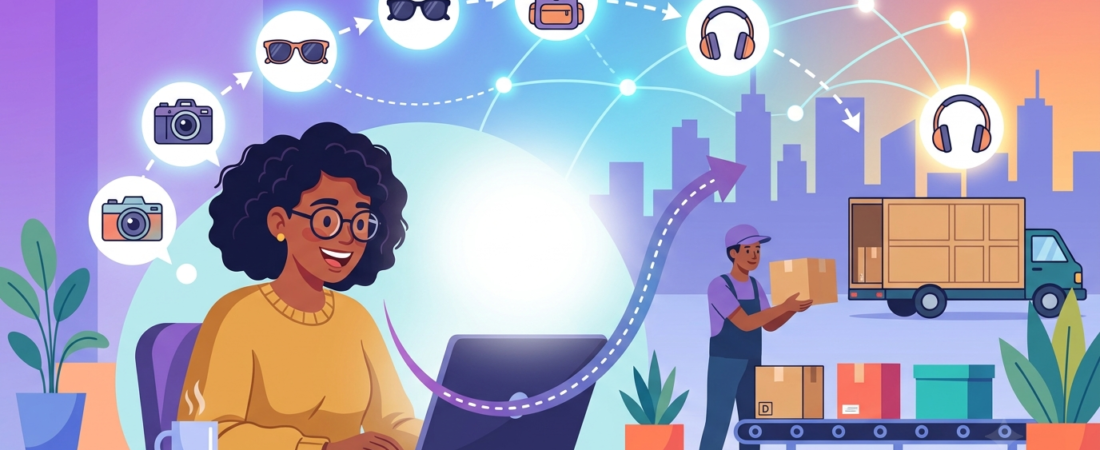
With dropshipping, you sell through an online store without holding inventory yourself. When an order comes in, the supplier packs and ships it directly to your customer. This saves you from managing a warehouse or storing stock. However, the business still requires planning, marketing, and consistent work.
What Is Dropshipping, Exactly?
Dropshipping is a retail fulfillment method. Your store takes the order, while a third-party supplier stores, packs, and ships the product.
Here is the basic flow:
You choose a product → list it in your store → a customer buys it → you send the order to your supplier → the supplier ships it to the customer.
You earn the difference between what the customer pays and your total costs. Those costs can include the supplier’s product price, shipping, payment processing, store expenses, advertising, refunds, and other operating costs.
How to Start Dropshipping Without Guessing Your Way Through It
1. Pick a Specific Niche
Don’t start by selling everything. A focused niche helps you understand who you’re selling to and what they actually need. For example: Instead of selling a mix of home products, focus on one specific need. You could build a store around space-saving storage products for people living in small apartments.
Then check whether the demand is real. Use Google Trends, keyword research, and competitor analysis to see if interest is consistent. A short-lived trend is not a market.
2. Find Products That Give People a Reason to Buy
Your dropshipping product needs to solve a real problem and have clear demand. Furthermore, you need enough margin to cover your costs and a supplier you can rely on to deliver.
Competition matters too. Other stores may sell the same product. So, your edge could come from:
- Better positioning
- Stronger product pages
- Useful content
- Better branding
- Reliable customer service
- More convincing offer
3. Treat Your Supplier Like a Business Partner
This is one of the easiest parts of dropshipping to underestimate.
Your supplier affects delivery times and product quality.
Before committing, investigate:
- Shipping times
- Inventory reliability
- Return policies
- Supplier reviews
- Relevant certifications.
Order samples so you can see the product and assess its quality yourself (if possible).
4. Calculate the Numbers Before You Launch
Importantly, don’t price your product by simply adding a few dollars to the supplier’s cost.
Say you sell for $40. After $18 supplier cost, $5 shipping, $2 payment fees, and $8 to acquire the customer, you’re left with just $7 – before refunds, software, taxes, and other expenses.
That’s why product economics matter before you advertise.
A $40 sale doesn’t mean $40 in profit. Know your numbers first.
5. Build a Store People Can Trust
Your website does not need dozens of pages to launch.
It does need to answer the questions a nervous buyer has before clicking “Buy.”
Your product pages should clearly explain what the product does, who it is for, what comes with the purchase, how long delivery is expected to take, and what happens if the customer wants to return it.
Avoid blindly copying supplier descriptions. Rewrite them so they actually help shoppers understand the product.
Clear product information, contact details, useful content, and an easy buying experience can all contribute to a better customer experience.
6. Choose How You Will Get Customers
Now, it’s crucial to note that building the store is only half the job.
You still need people to discover it.
Depending on your audience and product, you might use search engine optimization, social media content, paid advertising, email marketing, or a combination of channels.
Do not assume one channel will automatically work.
Your performance is influenced by:
- Your product
- Audience
- Creative material
- Pricing
- Customer experience
So, start with a clear customer profile and choose channels where that audience actually spends time.
7. Choose a Platform and Start Selling
You don’t need to build a website from scratch. For beginners, Shopify is one of the simplest ways to launch a store. You can create your storefront, add products through dropshipping apps, accept payments, and manage orders from one place.
A simple starting process looks like this:
Create your Shopify store → choose a dropshipping app → find a supplier → import your products → customize your product pages → set your pricing → connect payments → launch.
You can also use Wix with Modalyst or WooCommerce if those platforms better fit your needs. Wix integrates dropshipping directly through Modalyst, while WooCommerce offers dedicated dropshipping extensions.
The Real First Step
Wondering how to start dropshipping? Well, you need a structured roadmap! This is why we have released the Dropshipping Mastery Ebook to help entrepreneurs like you start an actual dropshipping business that makes money.
This book takes you from choosing your niche and understanding your customer to finding products, evaluating suppliers, building your store, generating traffic, measuring performance, automating operations, scaling your product line, and building a brand beyond dropshipping.
If you’re serious about building the business, start with the complete roadmap.
Get our Dropshipping Mastery Ebook and start building.
FAQs
Q.1 How do I start dropshipping?
Answer: Choose a niche, research products, find a reliable supplier, build an online store, set your prices, and start marketing. Focus on product quality and testing before scaling.
Q.2 Can I dropship for free?
Answer: You can start with very little money. You may use free trials, free store themes, organic social media, and suppliers that charge no upfront inventory costs. However, running and growing a store usually involves some expenses.
Q.3 Is dropshipping easy to start?
Answer: Yes, getting started is relatively easy because you don’t need to hold inventory or ship orders yourself. The harder part is finding worthwhile products and attracting customers.
Q.4 Can I be rich by dropshipping?
Answer: Dropshipping can be very profitable. Success depends on:
- Product selection
- Pricing
- Marketing
- Supplier reliability
- Customer experience
- Consistent execution.
Treat it as a real business, not a shortcut to quick wealth.
Q.5 What are the top 10 dropshipping products?
Answer: Popular categories include:
- Apparel
- Footwear
- Beauty products
- Kitchen tools
- Home décor
- Baby products
- Pet supplies
- Office products
- Phone accessories
- Car accessories
- Demand and competition change, so validate products before investing heavily.